METHODS · 2026-08-04
Korean-Style Brisket: Chadolbaegi vs Texas Low-and-Slow
By Bulgogi Curator
Same primal, opposite strategies: 1–2 mm slices for the table grill, or hours of collagen conversion for the smoker.
TL;DR
Same primal, opposite strategies: 1–2 mm slices for the table grill, or hours of collagen conversion for the smoker.
American barbecue culture treats brisket as a long project. Korean tabletop culture often treats the same primal as a seconds-long crisp. Both are correct — they solve different problems.
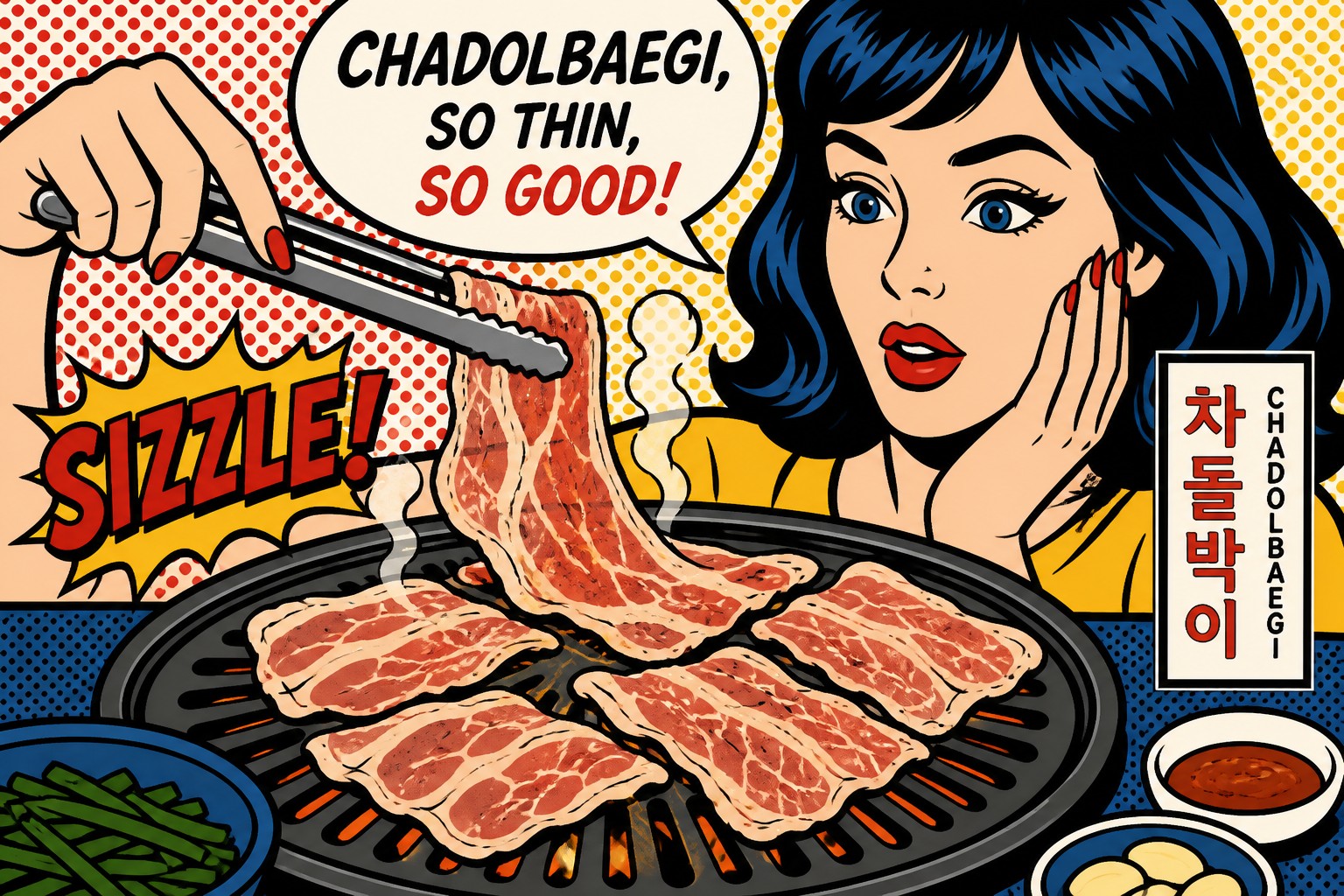
Chadolbaegi is typically the point half of the brisket, sliced across the grain so thin you can see light through fat and lean stripes. Whole-muscle shear force numbers call brisket “tough.” Geometry short-circuits that toughness.
Technique: very hot plate, few slices at a time, flip as edges turn translucent and freckle brown, dip in sesame oil with salt and pepper. Overcooking turns it into brittle chips; undercooking leaves waxy fat.
Texas-style flat needs collagen to gelatinize over many hours. That is a different dinner. You can hybridize — smoke a point, chill, and slice thin for a chadol-inspired finish — but do not expect paper-thin raw slices to behave like a 12-hour packer brisket.
On a restaurant menu, chadol is the value educator: it shows why KBBQ is not only “short rib and bulgogi.” Ask how thin they slice. The answer is the dish.
More Korean food
Relevant pages on the two hub sites — recipes and a BBQ directory on bulgogi.ai, street rice cakes on tteokbokki.ai.
- tteokbokki.ai — street rice cakes →School-cart sauce, rose, mala, and tteok types.
- White kimchi for the grill table →A no-chili napa that cuts fat better than more gochujang.